How Do Cam Models Make Money? A 2026 Breakdown
Contents
- Token and Tip Systems
- Private Shows and Pay-Per-View
- Subscription and Fan Club Revenue
- Platform Revenue Splits
- Additional Revenue Streams
- Expenses and Net Income
- What Actually Drives Earnings
Live cam modeling is a profession with a diverse and often misunderstood income structure. Unlike traditional employment where a paycheck arrives on a fixed schedule, cam model income comes from multiple simultaneous revenue streams — some predictable, others highly variable. Understanding how that income actually works is useful both for people considering the profession and for viewers curious about the economics behind the platforms they use.
Token and Tip Systems
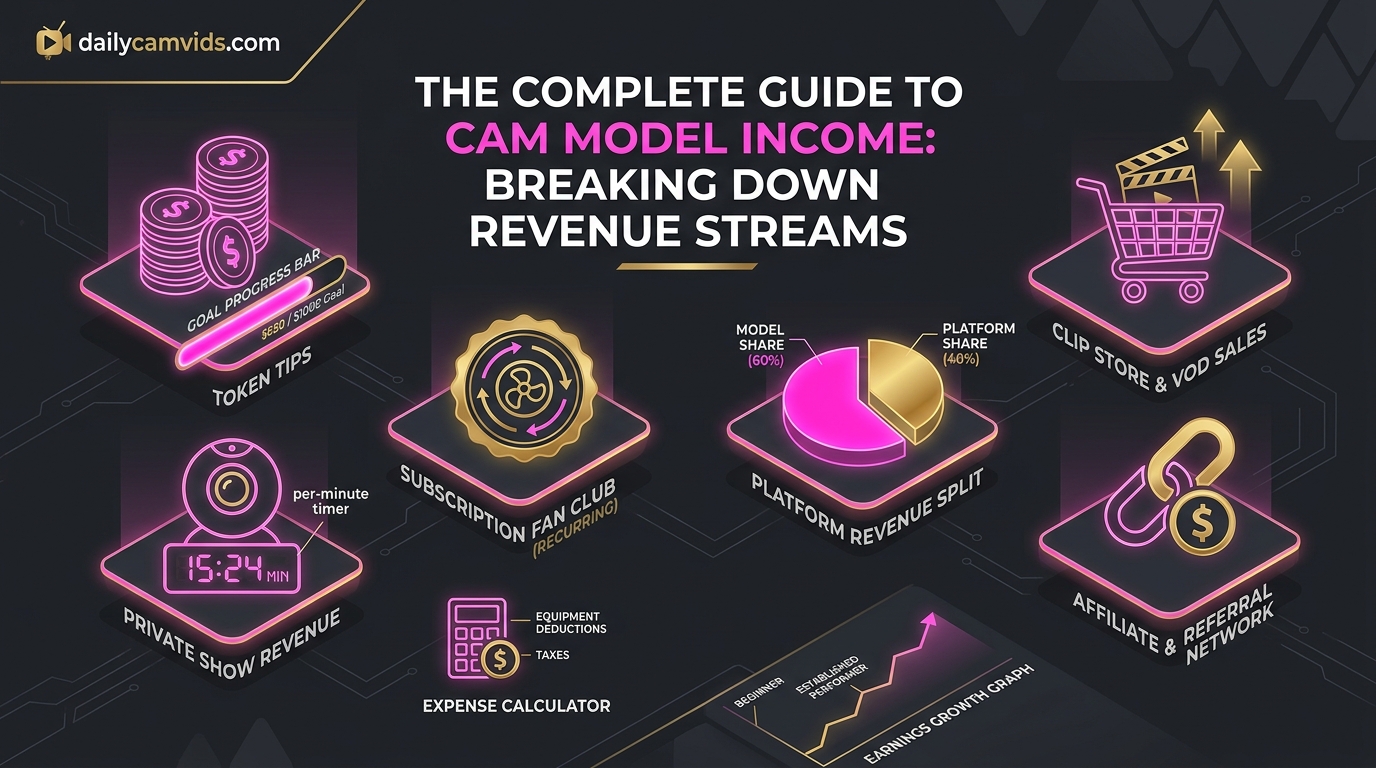
The majority of public cam show income flows through virtual currency systems. Platforms like Chaturbate use "tokens" — digital credits viewers purchase in bulk and then spend during broadcasts. On Chaturbate, tokens are sold to viewers at rates that vary by purchase size (larger bundles cost less per token); broadcasters receive a fixed rate per token (approximately $0.05 per token at standard rates, though this varies by the model's specific arrangement and volume thresholds).
In a typical public broadcast, a model performs for a general audience while viewers tip tokens for specific requests, reactions, or to fill progress bars that unlock certain content or goals. The interactivity of this system is central to its appeal — viewers are participants, not passive consumers. A single goal show might target 5,000 tokens for a specific event, creating a collective contribution dynamic.
Tip percentages and platform take rates vary meaningfully across sites. Models often compare these rates when deciding which platforms to prioritize.
Private Shows and Pay-Per-View
Private shows represent a premium revenue stream where a single viewer pays for exclusive one-on-one time. These are typically priced per minute, with rates set by the model (within platform limits) and the platform taking a percentage. Private show rates typically range from a few tokens per minute on the lower end to 60-90+ tokens per minute at the premium tier.
The economics here are different from public broadcasts: revenue is more predictable per session but requires the model to be directly engaged with one viewer rather than potentially hundreds. Many experienced broadcasters use public shows to build audiences and convert engaged viewers to private sessions.
Pay-per-view (PPV) content — pre-recorded video clips or photos unlocked by a token payment — adds another passive income dimension. Once produced, PPV content can generate ongoing revenue without additional real-time work.
Subscription and Fan Club Revenue
Many cam platforms have added subscription or fan club features, allowing viewers to pay a recurring monthly fee for exclusive access, content, or perks. This creates more predictable income — a base of recurring revenue that doesn't depend on any given day's broadcast performance.
Fan sites like OnlyFans, Fansly, and similar platforms operate primarily on this model, allowing creators to charge monthly subscriptions with additional tips and PPV on top. Many cam models operate across both live cam platforms and fan sites simultaneously, using live broadcasts to drive subscriptions elsewhere.
Platform Revenue Splits
Platform revenue splits are one of the most important variables in a cam model's income equation. Industry-standard rates typically give models between 40% and 60% of gross revenue generated, though the specifics vary significantly by platform and by the model's negotiated arrangements.
Higher-earning models on some platforms can access better split rates through performance tiers. Some platforms offer improved splits in exchange for exclusivity — requiring the model to broadcast only on their platform, which trades off cross-platform income diversification.
Fan site platforms like OnlyFans have historically offered creators 80% of revenue (the platform takes 20%), which is significantly more creator-friendly than many traditional cam site arrangements. This disparity has been a major driver of the shift toward fan site supplementary income.
Additional Revenue Streams
Experienced models typically diversify beyond their primary platform income:
- Clip sites: Pre-recorded content sold through platforms like clips4sale or Manyvids, generating passive income from a catalog of produced material.
- Merchandise and custom content: Personalized content requests, autographed merchandise, and customized videos command premium prices from established fan bases.
- Affiliate programs: Many adult platforms offer referral commissions for directing new sign-ups. Models with social media followings can generate meaningful affiliate income alongside performance revenue.
- Social media tip platforms: Some creators receive direct support through platforms like Throne or Amazon wishlists from fans who want to contribute without platform intermediaries.
For an analysis of how different platform structures compare, see our overview of cam site revenue models.
Expenses and Net Income
Gross income from cam modeling is meaningfully different from net income. Common professional expenses include:
- Equipment: High-quality webcams, lighting setups, and reliable internet connections represent upfront and ongoing costs. Professional-grade streaming setups can range from a few hundred to several thousand dollars.
- Production costs: Wardrobe, set design, and any props relevant to content.
- Platform fees beyond revenue splits: Some platforms charge additional fees for premium features or promotional placement.
- Taxes: Cam models are typically classified as independent contractors, meaning self-employment tax obligations apply. In the US, this means setting aside approximately 25-30% of income for federal and state taxes, plus quarterly estimated payments.
- Privacy and security tools: VPNs, privacy-focused services, and security measures are both professional necessities and costs. See our safety and privacy guides for more on protecting creator privacy.
What Actually Drives Earnings
Income in cam modeling is highly variable and not primarily driven by how much time is spent broadcasting. Key differentiating factors include:
- Audience size and loyalty: A smaller, highly engaged audience that tips generously outperforms a large passive viewership. Returning viewers who know and support a specific model are the foundation of stable income.
- Scheduling consistency: Regular broadcast schedules build viewer habits and create repeat traffic. Models who stream at consistent times develop more reliable attendance.
- Platform selection: Different platforms have different traffic volumes, audience demographics, and payout structures. Platform choice and the ability to work across multiple platforms significantly affects earning potential.
- Content strategy and niche: Models who develop a clear identity, niche, and content approach tend to attract more dedicated fan bases than generalists.
Income ranges in cam modeling span from a few dollars per session for new entrants to six-figure annual income for established performers with large, loyal audiences — the distribution is highly skewed. For more on how platform economics shape these outcomes, see our analysis of subscription platform economics.
React to this article
Comments
Loading…
Leave a comment
Loading…