Mental Health and Intimacy: The Connection
Contents
- The Bidirectional Relationship
- How Mental Health Affects Sexual Experience
- How Sexual Experience Affects Mental Health
- Common Patterns to Recognize
- Supporting Both Simultaneously
- When to Seek Professional Support
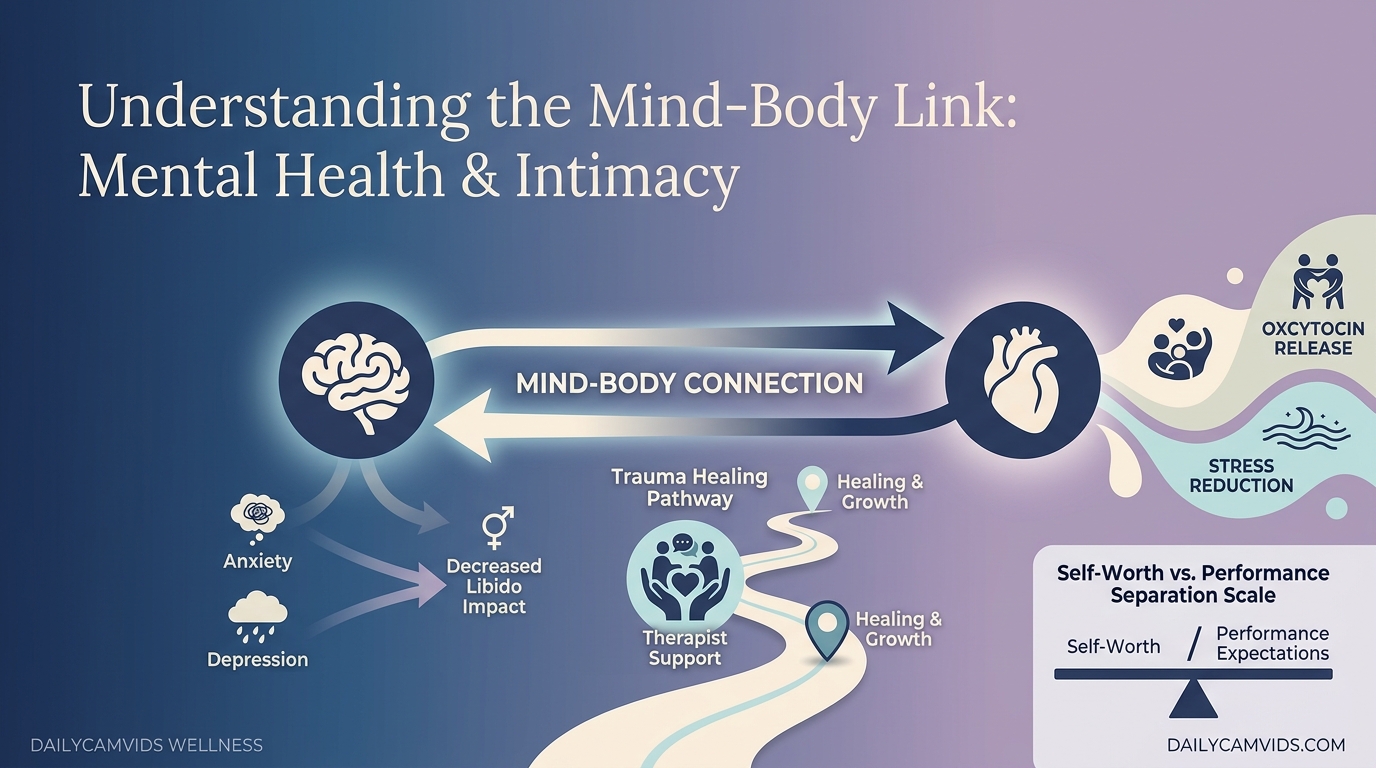
Mental health and sexual wellbeing are more closely connected than many people realize — and the relationship runs in both directions. Psychological states affect sexual experience and desire; sexual experiences affect mood, self-esteem, and mental health. Understanding this bidirectional connection is useful for anyone navigating either domain.
General educational information. Mental health concerns warrant professional support — see a qualified therapist, counselor, or physician for personal guidance.
The Bidirectional Relationship
The mind-body connection is particularly strong in sexuality. Sexual response involves the nervous system, hormones, and psychological states in an integrated way — meaning that what's happening emotionally and psychologically isn't separable from the physical experience of sexuality.
Research in sexual medicine consistently demonstrates that mental health conditions affect sexual functioning and satisfaction, while also showing that sexual experiences (positive and negative) affect mental health outcomes. This isn't a surprising finding given what we know about the nervous system and hormonal feedback loops — it's a well-established connection with practical implications.
How Mental Health Affects Sexual Experience
Depression: Reduced libido is one of the most commonly reported symptoms of depression, often appearing before other more visible symptoms. Depression affects both desire and the ability to experience pleasure (anhedonia — difficulty enjoying things that were previously pleasurable). Antidepressant medications, particularly SSRIs, can themselves affect sexual function — reduced libido and delayed orgasm are reported side effects. This is worth discussing with a prescribing provider if it's affecting you.
Anxiety: Anxiety can interfere with sexual experience by increasing self-monitoring ("spectatoring" — mentally watching yourself rather than being present), increasing performance concerns, and activating the sympathetic nervous system (fight-or-flight response) in ways that are incompatible with sexual arousal. This is a common mechanism behind sexual performance anxiety.
Trauma: Trauma — particularly trauma related to sexual experiences — can have significant effects on sexual functioning, desire, and comfort. This is a complex area best addressed with the support of a trauma-informed therapist. The effects are real and don't reflect permanent damage — effective therapeutic approaches exist.
Stress: Elevated cortisol (the stress hormone) suppresses testosterone and affects desire in both sexes. High chronic stress is one of the most common drivers of low libido that isn't related to a medical condition or medication.
How Sexual Experience Affects Mental Health
The relationship runs the other way as well:
Positive sexual experiences and connection: Physical intimacy releases oxytocin, which supports bonding and reduces stress. Positive sexual experiences within a healthy relationship context are associated with improved mood, reduced stress, and stronger relationship satisfaction — which itself is a significant predictor of overall wellbeing.
Negative experiences: Negative sexual experiences — including non-consensual experiences, repeated experiences of dissatisfaction, or shame-inducing experiences — can have lasting effects on self-esteem, body image, and relationship with sexuality.
Shame and stigma: For people whose sexuality doesn't conform to the majority (including LGBTQ+ individuals, people with less mainstream sexual interests, and others), the experience of shame and stigma around sexuality is itself associated with worse mental health outcomes. The research on this is robust — minority stress related to sexuality is a real phenomenon with real mental health consequences.
Common Patterns to Recognize
- Low desire that worsened during stressful periods is more likely stress-related than a medical condition — addressing the stress source is often the relevant intervention
- Difficulty being present during sex, intrusive thoughts, or discomfort that appears disconnected from the current situation may be indicators of unprocessed anxiety or trauma worth exploring with a therapist
- Sexual experience as a source of significant shame or distress is worth discussing with a mental health professional, regardless of what the specific concern is
- Noticing that libido changed significantly when starting medication is worth raising with the prescribing provider — alternatives or adjustments may be available
Supporting Both Simultaneously
Supporting mental health and sexual wellbeing simultaneously involves attending to both:
- General mental health practices — sleep, exercise, stress management, social connection — affect sexual health as a downstream consequence
- Communication with partners about how mental health is affecting you sexually reduces misinterpretation and reduces the additional stress of managing both a mental health challenge and a confused partner
- Separating self-worth from sexual performance — a core mental health and sexual wellness overlap — is worth deliberate attention
Our guide on maintaining a healthy relationship with adult content addresses some of the specific ways media consumption interacts with mental health and sexuality.
When to Seek Professional Support
Consider seeking professional support if:
- Mental health symptoms (depression, anxiety) are affecting your sexual life in ways that cause distress
- You're experiencing sexual dysfunction (persistent difficulties with desire, arousal, or orgasm) and it's causing you distress or relationship difficulty
- You have a history of sexual trauma that's affecting current sexual experience
- Shame or distress about your sexuality is significantly affecting your quality of life
Sex therapists specifically specialize in the intersection of mental health and sexuality. A sexual health physician can address physical and medication-related contributors. See our guide on when to see a professional for more on what different professionals address.
React to this article
Comments
Loading…
Leave a comment
Loading…