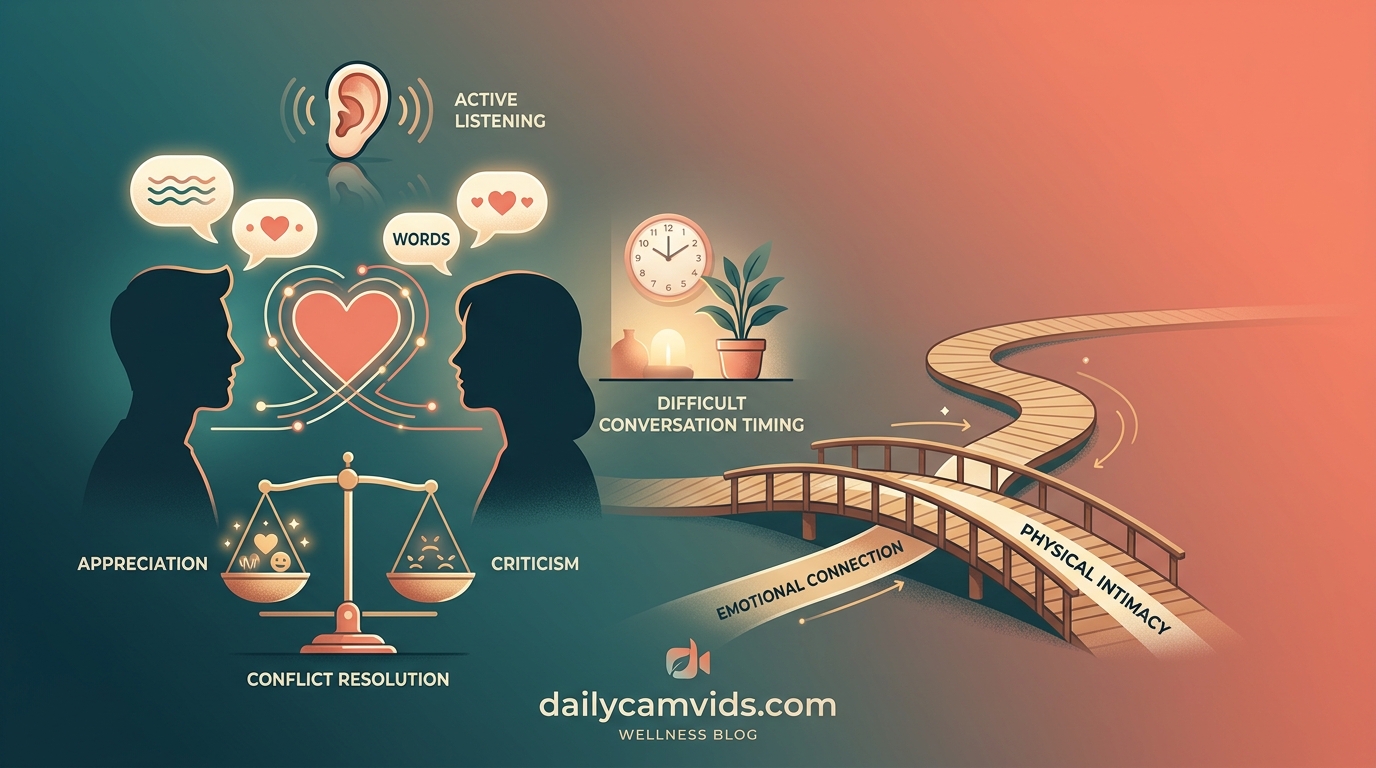
Communication Tips for Healthier Relationships
Contents
- Why Communication Is the Core Skill
- Everyday Communication Practices
- Navigating Difficult Conversations
- Active Listening
- Communication During Conflict
- Communication and Intimacy
- Common Communication Pitfalls
Relationship quality and communication quality are so closely linked in the research literature that they're nearly inseparable. This guide covers practical communication skills for relationships — not just the dramatic conversations, but the everyday habits that determine whether a relationship feels connected or distant over time.
General educational information. A couples therapist can provide personalized support for relationship communication challenges.
Why Communication Is the Core Skill
Decades of relationship research — including the extensive work of researchers like John Gottman at the Gottman Institute — identifies communication patterns as among the strongest predictors of relationship satisfaction and longevity. The specific finding: it's not the presence of conflict that predicts relationship quality, but the communication patterns during and around that conflict.
This finding points to communication as learnable skill, not innate compatibility. People are not born good communicators — they develop communication habits through their upbringing, which may or may not be particularly healthy. These habits can be examined and changed with awareness and practice.
Everyday Communication Practices
The foundation of good relationship communication isn't the big conversations — it's the accumulation of small everyday interactions:
Bids for connection: Small moments of reaching out to a partner — sharing something interesting, asking about their day, a touch or look during an ordinary moment. Research shows that partners who "turn toward" these bids (responding with engagement rather than neutrality or dismissal) have significantly better relationship outcomes over time. This requires presence and attention, not elaborate gestures.
Regular check-ins: Setting aside deliberate time for conversation — beyond logistics — helps couples stay connected through busy periods. Specific questions ("What's the most interesting thing that happened to you today?" rather than "How was your day?") tend to generate more genuine exchange than open-ended openers that often get perfunctory answers.
Appreciation and acknowledgment: Expressing appreciation for specific things your partner does, and acknowledging when they've done something considerate or made an effort, is a small practice with outsized relationship impact. The research on appreciation in relationships is consistent and robust.
Navigating Difficult Conversations
When a difficult topic needs to be addressed:
- Timing matters: Raising a difficult topic when either partner is exhausted, hungry, rushed, or already stressed sets the conversation up to go poorly. Choose a neutral time when both people have capacity for a real conversation.
- Soften the start-up: How a difficult conversation begins strongly predicts how it ends. Starting with "I've been feeling" rather than "You always/never" makes it less likely the conversation escalates immediately into defensiveness.
- One topic at a time: Bringing up multiple concerns in the same conversation ("and another thing...") is a common pattern that overwhelms and derails. Address one issue at a time.
- Stay on the current issue: Bringing in past grievances ("this is just like when you...") during a current-issue conversation compounds complexity and prevents resolution of either issue.
Active Listening
Active listening — genuinely attending to what a partner is expressing rather than preparing your rebuttal — is a skill distinct from hearing. Practical elements:
- Face your partner and make eye contact; put down your phone
- Let them finish before responding — resist the urge to interrupt even when you have a clear counter-thought
- Reflect back what you heard before responding ("What I'm hearing you say is X — is that right?") to confirm understanding before addressing it
- Ask clarifying questions rather than assuming you understand
- Acknowledge your partner's perspective before providing your own, even if you disagree with it ("I can see why you felt that way")
Communication During Conflict
Gottman's research identified four communication patterns strongly associated with relationship dissolution: criticism (attacking character rather than addressing behavior), contempt (superiority and disrespect), defensiveness (counter-attacking rather than acknowledging), and stonewalling (withdrawal from the conversation). These are sometimes called the "Four Horsemen."
Their antidotes are learnable: gentle start-up instead of criticism; building a culture of appreciation and respect as an antidote to contempt; taking responsibility for some aspect of the issue rather than counter-attacking; and physiological self-soothing (taking a break when overwhelmed) rather than stonewalling.
Communication and Intimacy
Sexual and emotional intimacy in long-term relationships is maintained significantly through communication — about preferences, desires, how each person is feeling about the relationship, and what each needs from the other. This includes direct conversations about sexual satisfaction and needs, which many couples avoid despite the significant impact on relationship quality.
For specific guidance on the sexual communication dimension, see our guides on talking to a partner about boundaries and understanding consent.
Common Communication Pitfalls
- Assuming instead of asking: Assuming you know what a partner thinks, feels, or wants leads to misunderstanding more often than asking directly
- Mind reading expectations: Expecting a partner to know what you need without expressing it ("if they really knew me, they'd know") sets up a dynamic where needs go unmet and resentment accumulates
- Avoiding the uncomfortable: Consistently avoiding difficult topics allows small issues to grow into larger ones. Regular gentle communication about small concerns prevents the accumulation that makes later conversations explosive
- Bringing in the past during a current conflict: This compounds the current issue and usually derails resolution of either one
For the specific application of these principles in sexual health contexts, see our articles on consent, boundaries, and the broader sexual wellness guide at a beginner's guide to sexual wellness.
React to this article
Comments
Loading…
Leave a comment
Loading…